
Comments: No comment
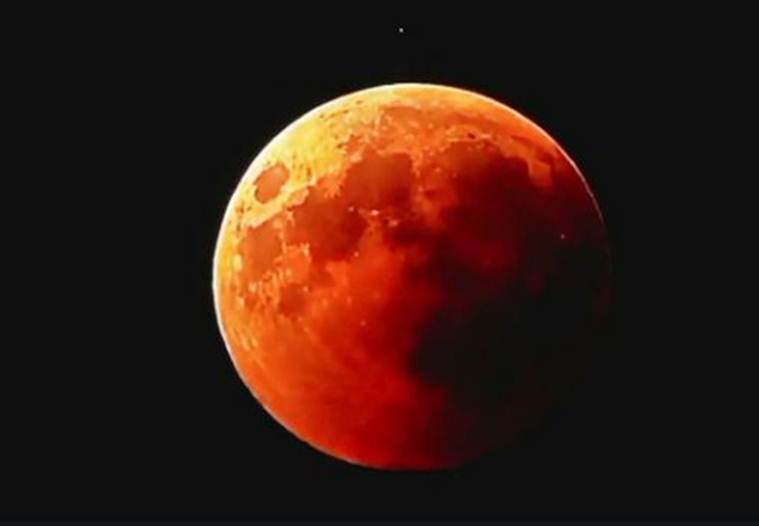
yesterday last week, I started this post last week but ..*sigh*. Anyway, I didn’t get to see the bloody moon (pun intended) here in Abuja, and I heard Lagos didn’t as well (even UK so it’s probably not the witches fault).
 The time of full impact was said to be 20:22 GMT, I was out from like 7pm but it was so cloudy, got a glimpse of the moon when the clouds cleared for a bit:
The white balance on my phone however didn’t let me capture the moon as it really was and before I knew it, the cloud had covered it again. So how do these guys know when an eclipse is going to happen?. Let’s experiment, so take the sun(torch), earth(globe) and the moon(a small ball). Place the globe in the middle… Oh! Look, there’s a picture from NASA, that should work.
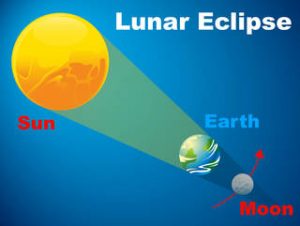 Let’s use their definition then 🙂
The moon moves in an orbit around Earth, and at the same time, Earth orbits the sun. Sometimes Earth moves between the sun and the moon. When this happens, Earth blocks the sunlight that normally is reflected by the moon.
Ok, you can still take the ball, globe and torch if you’re looking into practicals but I can’t help you anymore :p. Visit NASA’s site for more explanation on eclipse…
So…………….
How have we been predicting eclipses for over 2000 years? The first time we go through something is always different, eye-opening, and whatever grammar you can think of. But then, over time, it keeps happening. In this case let’s say you’re one of the early humans. You begin to lose trust in the sun always shining and start recording when these events happen. Centuries go by, your descendants keep recording and eventually enough of a pattern has built up that early civilizations are able to predict when these events might occur. With records stretching back to 700BC, men have been able to predict when and where these events would occur.
If you look up where the path of the eclipse is, and marvel at how modern science figured out exactly when, where, and how, spare a thought to all the generations of people who helped make that possible; from the observers who didn’t know what was happening over hundreds and hundreds of years but still bothered to write down what they saw, to the people who built the modern satellites that made recent eclipse maps so accurate. It took all of them to get to where we are today.
When I was taking a data science course on IBM’s cognitiveclass.ai, I came across the quote above. In my opinion, the quote means we trust God without facts/figures but you mortals have to prove something using data. But.. What if.. (searching for the best word to start this sentence) .. Ah ok, I think even God likes to work with data. I mean before 2,000 years ago, an eclipse would probably have been considered only an act of God but there’s actually a pattern. So today’s post is about the predictions before the lunar eclipse that happenedIn God we trust, everyone else bring data
Funny facebook reaction to the cloudy sky
When Earth passes directly between the sun and the moon, a lunar eclipse takes place. Credits: NASA