

“I don’t think you should do it” Ciroma snorted sceptically.
“It wouldn’t cause any harm if I tried” Bolu shrugged and persisted
In another car, there was Zoey, driving and making a left turn with the traffic light on green for her lane and having 15 more seconds when Bolu’s blue Toyota corolla speeds from the opposite lane beating his light. A startled Zoey slams her brake hard and her sleeping brother, Alex hits his head on her chair real hard.
Alex was training to be a Mechanical Engineer, he now has a problem expressing himself. His injury dashed his dream. He is now depressed and not much fun to be around.
He is worried about how he would be able to take care of himself. His anger and anxiety rise when he sees any blue car…
And now there’s a mad man keying all the blue cars in his city.
——————————————————————————————————————–
While this is a fictional story, it is apparent that some Nigerians perhaps due to a sense of youthful exuberance or just being lawless have no regard for sign lights. I looked at FRSC’s reports of transport accidents in the four quarters of 2018 and combined them to analyze some causes of traffic.
I decided to extract accidents caused mainly by human errors. And by human errors, I mean things we as law-abiding citizens shouldn’t do. Accident causes like bad roads even if they can be human errors, can also be natural causes, so that and similar causes are excluded.
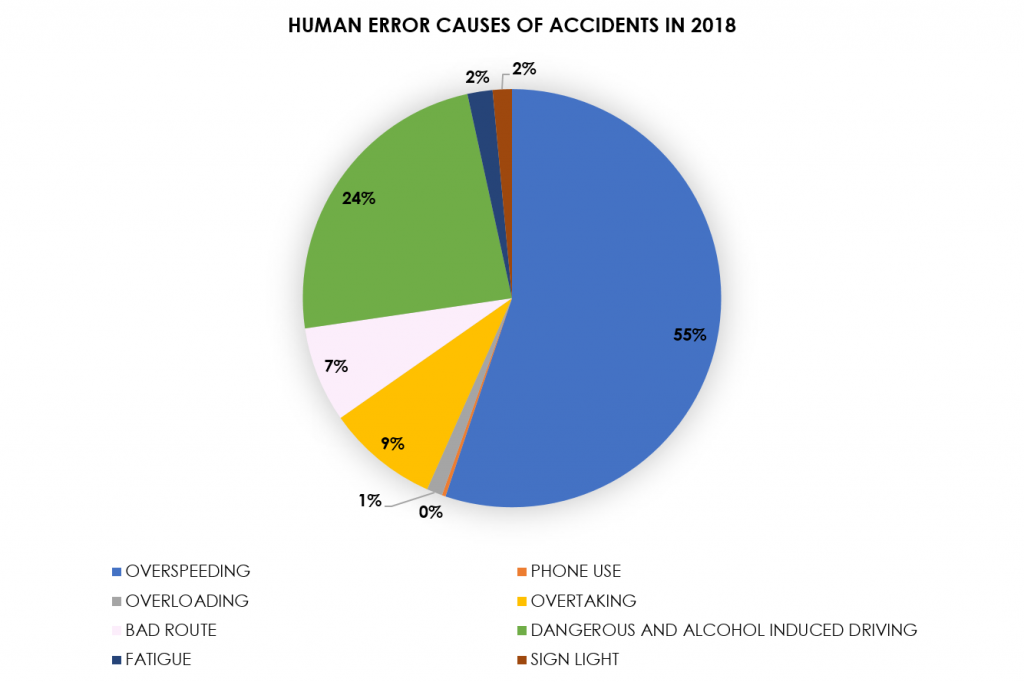
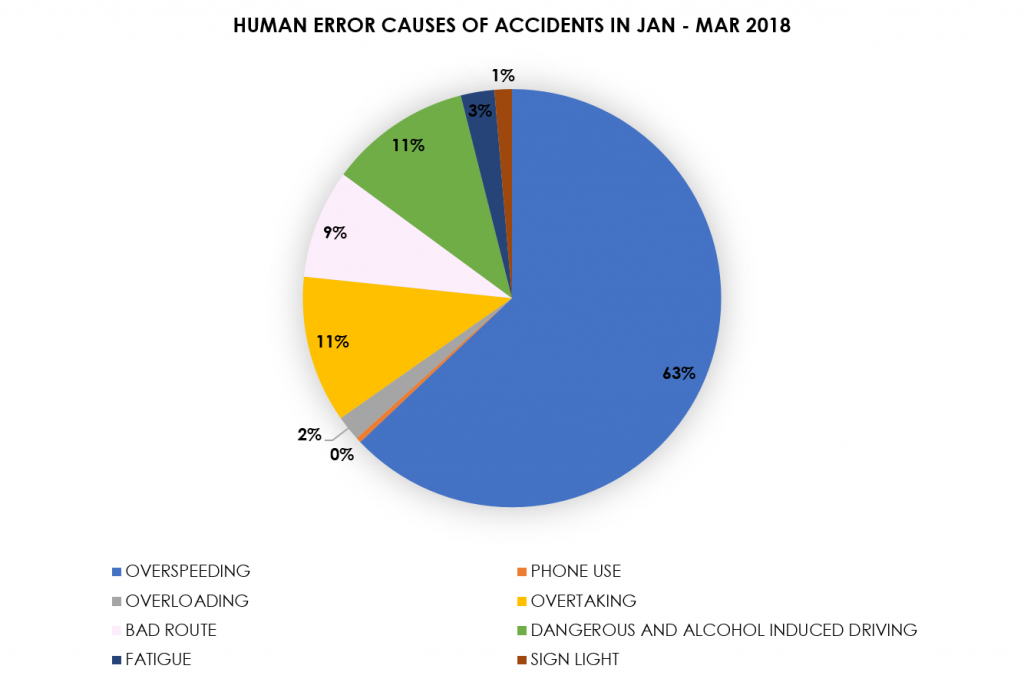
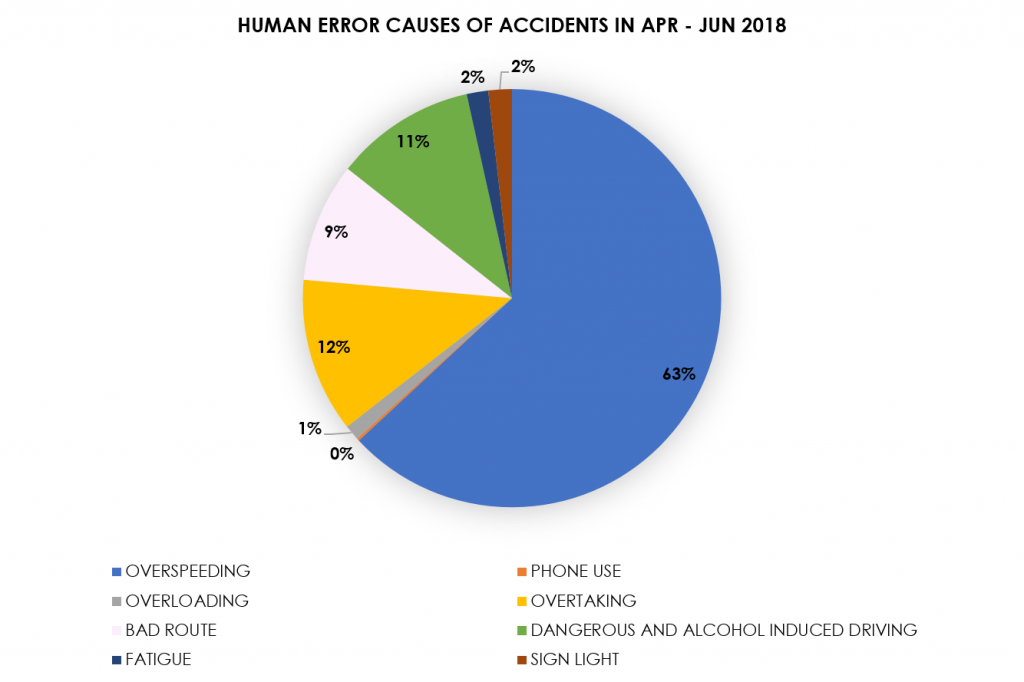
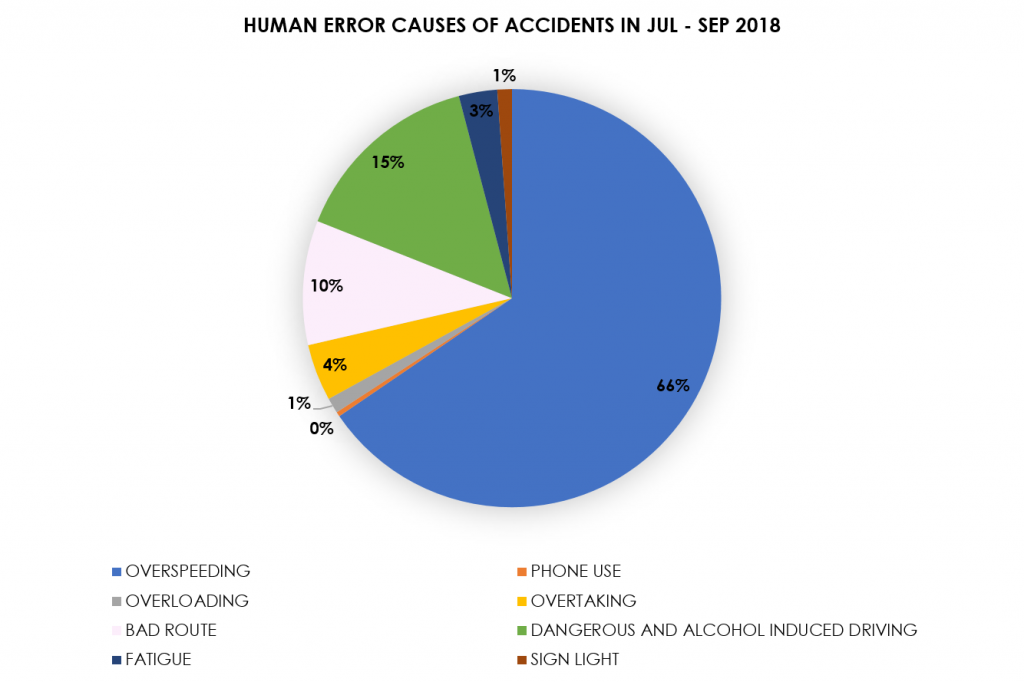
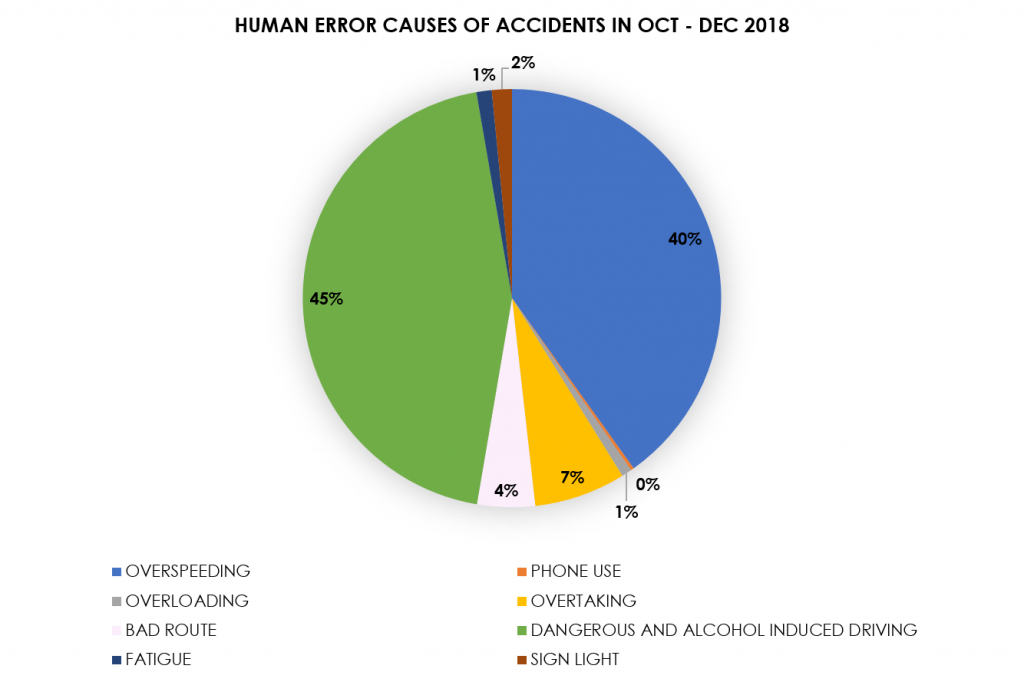
The major human error cause of accidents is Overspeeding. You can also note that in the last quarter of the year, Dangerous and alcohol-induced driving shoots up. This might be as a result of the festive seasons and holidays in that quarter. And, 2% of human error crashes are caused by traffic light violations.
Because this short story is about sign violation, I charted a graph expanding the 2%:

In the year 2018, FCT had the highest number of crashes from sign light violation. This didn’t come as a surprise to me especially cause I have lived in Abuja for years and witnessed their reckless driving.
Note, that one crash doesn’t mean only one (1) person is involved. It’s unlikely that only one individual would be involved in a crash. For example, in one of the quarters, we have at least ratio of 5 people to 1 crash and at most 12 people to 1 crash.

By taking this quarter’s data, I made a rough estimate of what the number of sign light violation cases might mean in the number of people involved. I would have to make another post about how I used Google Sheets for this analysis.

The above chart shows an analysis that suggests 15 crashes in FCT would mean 113 people were involved in the crash, 14 people were killed and 59 people injured making the total number of casualties 73. The total number of crashes caused by sign light violations in the year 2018 was 135. This could mean that 522 casualties were involved in crashes due to beating a red light.
So, when you think “it won’t cause no harm” when trying to beat a traffic light, think about the consequence. Think of how that can make a mad man, cause major injuries or worse, lead to the death of you and other individuals.
Great insights, 1 thing is clear though, the FRSC need to further breakdown these data in the simplest forms and do lots of awareness so Abu in Abuja or Sikiru in Lagos will know in real terms the overwhelming consequence of their next SLV or any other violations….. Good job.
I’m guessing because it’s “just” 2% of the problem, they won’t focus on that issue. Over speeding is something they feel the need to address, that’s why there are speed limits but I agree there’s not enough sensitization. And all factors should be observed. I guess introducing fines/tickets can help too?
Sadly, this circle may continue as long as punishment and fines for such violations are not strictly enforced, or are just a slap on the wrist. Seriously thinking though, the FCT data may not be any different from say Kano or some other location, if there were equal number of traffic lights intersections viz a viz landmass/road intersection s. Lagos of course is in a perpetual traffic gridlock!
True, if another state has similar road networks and use of traffic lights with Abuja, the violations just might be on the rise. This would be assuming that all things in say Kano are equal to FCT but there are a lot of factors to consider. Thanks for the feedback
There’s the effort towards data collection and there’s that towards interpretation. The latter is where the juice is and I’m glad this is episode 1, which suggests that this is just the beginning of the journey you will be taking us on with deep analysis of public data. Well done sis; looking forward to the next swing.
Thanks Dee
Personally I do think FRSC should be non existent in the first place. There should be a lot of restructuring in the Nigeria police force which will lead to effective policing. Every crash offender/victim if under the influence of alcohol or controlled drugs and substances should have no business utilising a motor vehicle in the first place. If a law like that is enforced and first responders to a crash scene(police, ambulance and firefighters) should before field sobriety test(should be conducted by police ) and if victim is determined to be under any type of influence, they should be placed under arrest and booked into jail. in cases where the driver is injured, they should be taken to the hospitals and then booked into jail after they’ve been treated and discharged. That would be a major wake up call for Nigerians. We need accountability systems put in place to check citizens and ensure they are law abiding and the reward for not abiding to laws might be jail or prison time. But of course all I’ve stated above are my opinions.
Very valid points. We need accountability systems. Thanks for voicing your opinions
This is not just a “tale by the moonlight” but matter of serous violations that are typical and realistic. Putting this into data analysis perspective will help us to tackle the problems with appropriate sanctions and solutions. Well-done.
Thanks mum. It is my hope that we come up with helpful solutions after such analysis